
The Capability Maturity Model for AI in Design

Summary: Six levels of AI design maturity. Early levels involve skepticism and ad-hoc tool use. Later levels embed AI into design systems and product delivery. The highest level envisions AI generating interfaces autonomously. As interfaces dissolve into real-time-generated experiences, the designer’s role shifts from pixel pusher to system gardener. The article includes a self-assessment framework and emphasizes the need to progress one level at a time to successfully institutionalize AI-driven design practices.
(Nano Banana 2)
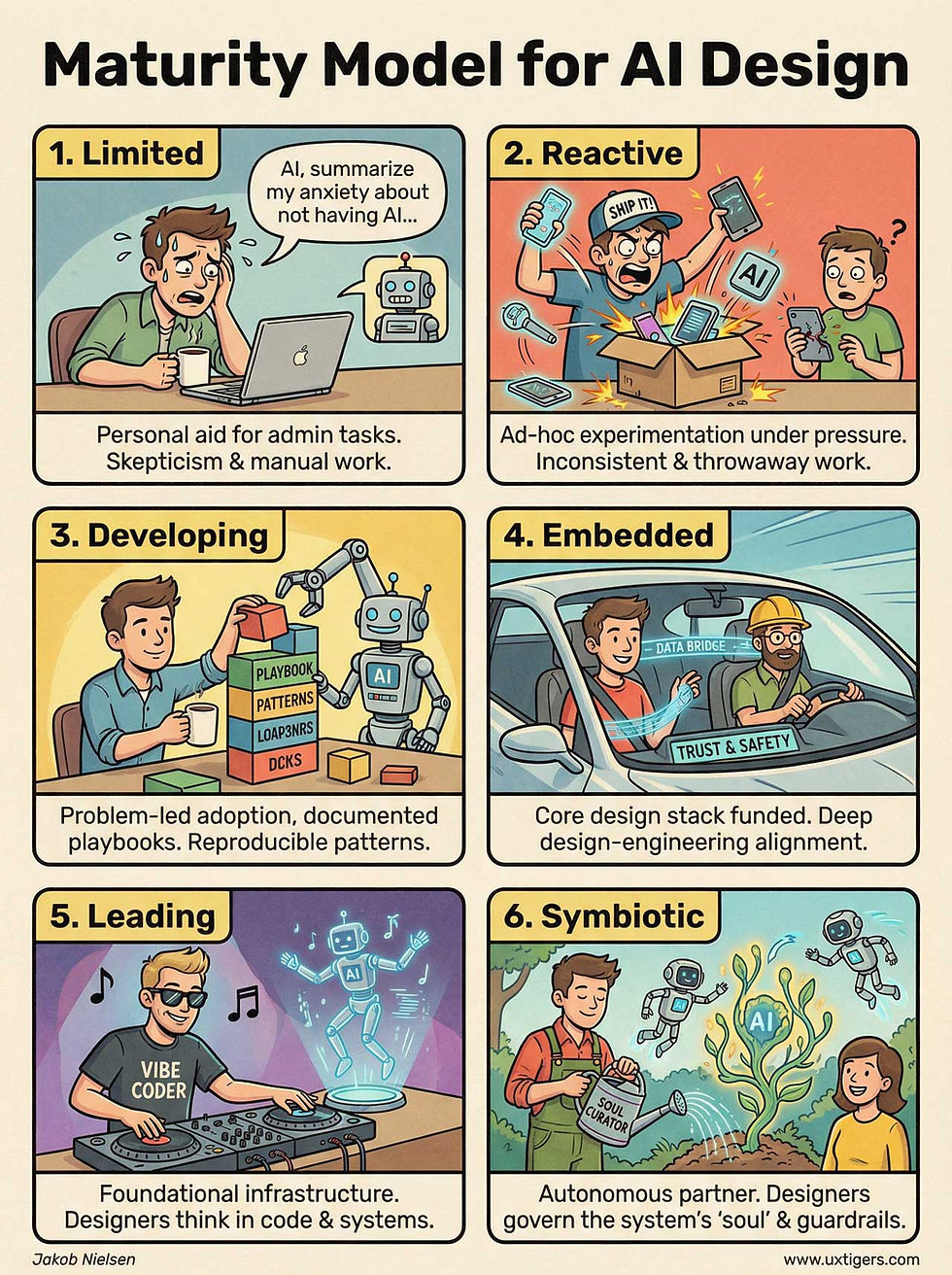
Matt Davey, who is Chief Experience Officer at 1Password, created a useful capability maturity model for AI in design. His original model has 5 levels (Limited, Reactive, Developing, Embedded, and Leading), each of which differs along 6 characteristics (Leadership on AI, Strategy & Budgeting, AI Culture & Talent, AI Learning & Enablement, AI Agents & Automation, and AI Product Design). Thus, the model covers both the use of AI within the design process and the use of AI in the resulting product. I recommend you read the full thing, but here is a summary of Davey’s 5 capability maturity levels for AI in design.
As discussed below, I added Maturity Level 6, Symbiotic, for a more complete capability maturity ladder.
For a summary of this article, watch my short overview explainer video (YouTube, 6 min.).
AI Design Capability Maturity Model (CMM) Levels
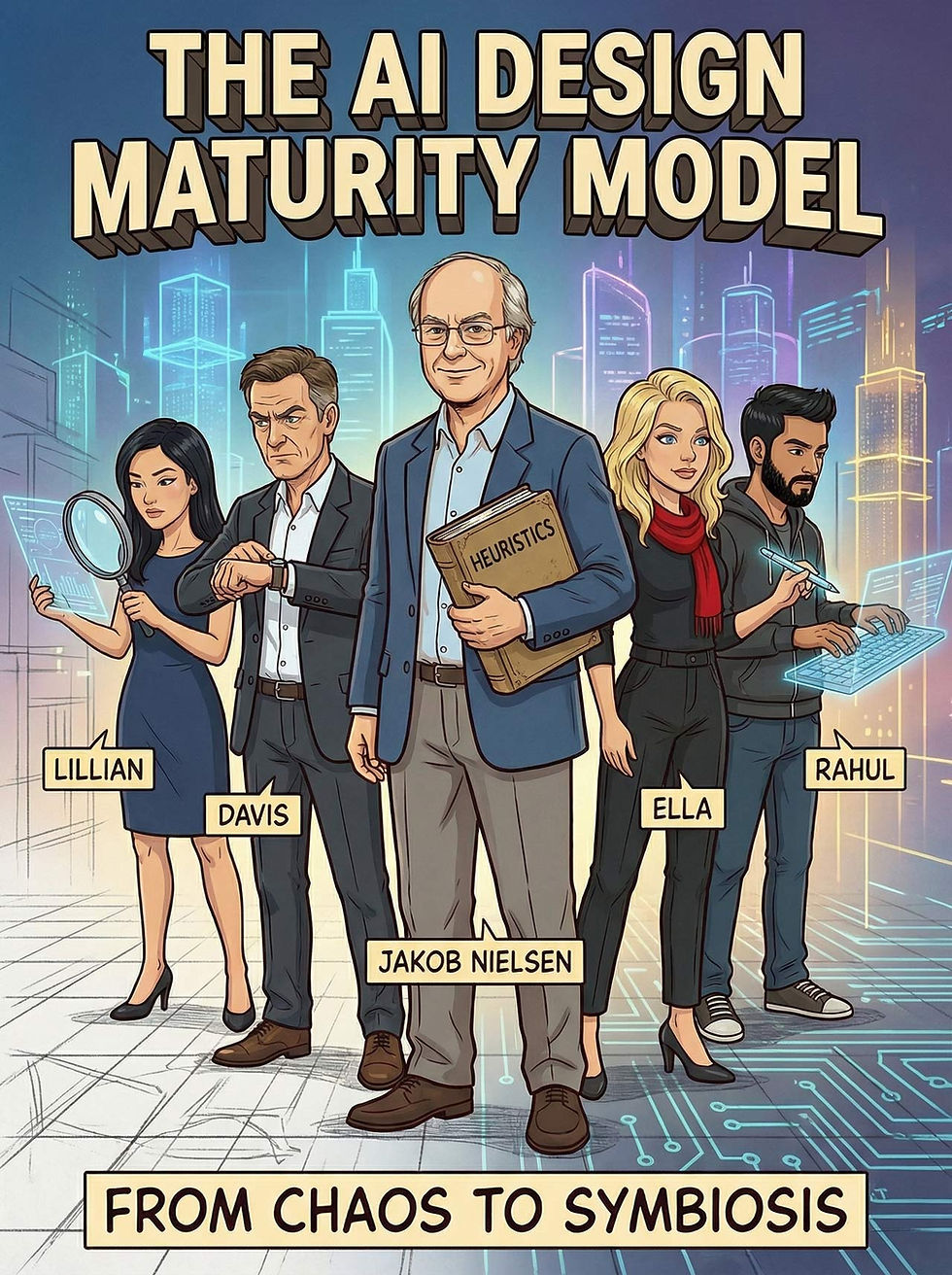
The comic book featuring my product design team, Lillian (user research), Davis (management), Ella (designer), and Rahul (implementation), has one page for each of the 6 AI maturity levels. Drawn with Nano Banana Pro.
Maturity Level 1: Limited

When staff maintain a skeptical attitude, their AI use becomes limited instead of visionary. (NotebookLM)
At this initial stage, AI is viewed strictly as a personal productivity aid for administrative tasks (like summarizing notes) rather than a tool for actual design work. There is no organizational strategy, budget, or training allocated to AI, leading to a culture of skepticism and anxiety among designers. Prototyping remains fully manual, and any AI implementation in products is treated as a superficial “bolt-on” feature with little understanding of technical constraints or long-term risks.

Treating AI as a bolt-on feature is a classic symptom of being at Level 1. (NotebookLM)

Maturity Level 2: Reactive

Perpetual fire-fighting means that you are stuck at the Reactive Maturity level, instead of proactively driving your AI future. (NotebookLM)
In the Reactive stage, usage involves ad-hoc experimentation without clear strategic intent, often driven by pressure to “ship AI” rather than solve user problems. While leadership encourages trying new tools, the lack of structured learning leads to inconsistent results, frustration, and throwaway work that cannot be easily maintained or edited. Ethical considerations and guardrails are typically an afterthought, addressed only when prompted by legal or security teams late in the process.

An overflowing bin of throwaway designs is a symptom of reactive AI use. What a waste. (NotebookLM)

Maturity Level 3: Developing

AI becomes a problem-led accelerator at Level 3. (NotebookLM)
Moving into the Developing stage, AI becomes a recognized accelerator for prototyping and communication, with leadership emphasizing problem-led adoption over random experimentation. Teams begin to invest in specific tools and documented playbooks, allowing designers to reproduce successful patterns and engage in peer learning. Designers build enough AI literacy to influence product boundaries and ethical questions early on, shifting the focus from simply generating artifacts to facilitating thoughtful design trade-offs.

Documenting the best patterns accelerates learning at any seniority level. (NotebookLM)

Maturity Level 4: Embedded

Design and development align to make an AI architecture. (NotebookLM)
At the Embedded level, AI is actively championed and funded as a core part of the design stack, with deep alignment between design and engineering systems. AI capability is widespread, enabling teams to create realistic, high-fidelity prototypes using real front-end components that reduce handoff friction. The scope of design expands to cover the entire experience, including how the system establishes trust, handles uncertainty, and manages refusal patterns effectively.

Goodbye, wireframes. Hello, realistic and functional prototypes. (Nano Banana 2)

Maturity Level 5: Leading

At Level 5, UX’s role is high-level framing and strategic oversight of AI progress. (NotebookLM)
In the Leading stage, AI is treated as foundational infrastructure where designers think natively in code and systems to explore, validate, and even ship features directly. The designer’s value shifts from producing artifacts to facilitating progress through high-level framing, critique, and strategic oversight, while utilizing “vibe coding” to push polish via reviewed code contributions. Responsible AI is synonymous with product quality, with technically fluent designers shaping behavior policies and safety boundaries to ensure long-term scalability and coherence.

Vibe coding and vibe design: you tell the AI what you want, and it makes it happen. Fundamental at Level 5. (NotebookLM)

New Challenges
Progressing through these 5 design maturity levels requires tightening alignment with three main ways AI differs from legacy UX design:
Traditional UI does exactly what you tell it (deterministic). AI is probabilistic, meaning designers must plan for times when the AI is wrong or has low confidence. Increasing AI design maturity requires you to explicitly design for probabilistic failure. Rather than assuming perfect AI outputs, designers must now proactively craft graceful degradation paths and uncertainty UI patterns, ensuring user trust remains intact even when the model's confidence is low.

Traditional UI was deterministic: safe, but limited. The AI user experience is probabilistic and will lead us to discover things we never thought to seek. (NotebookLM)
As AI takes over the generation of interfaces, the human designer’s role becomes more editorial. Consequently, the core design competency shifts from creation to curation and evaluation. Designers spend less time generating options and more time establishing robust evaluation criteria, reward functions, and safety boundaries that guide the AI's autonomous outputs.

Changing UX focus from creation to curation is a journey that accompanies increasing AI maturity. (NotebookLM)
This shift from creation to curation creates a structural challenge: the Junior Designer Dilemma. Historically, junior designers developed their taste and system-thinking by grinding out hundreds of manual screen variations. As AI automates this foundational pixel-pushing, mature organizations must proactively design new onboarding pathways that teach probabilistic evaluation and ethical oversight from day one, ensuring junior talent isn’t left behind by automation.

AI can do the work better and cheaper than a junior UX professional. Nobody will ever hire entry-level staff when optimizing next year’s budget. But if we don’t have junior staff, they won’t grow into senior staff in ten years. We need a new paradigm to train the senior staff of the future. (Nano Banana 2)
Maturity Level 6: Symbiotic
Level 5 (as described above) is probably realistically the best we can hope for today (in 2026), but I don’t think it represents where AI design should be in the future (in 2027). So I have added a new Level 6:

The UX role shifts from architecting interactions to nurturing an ecosystem that grows itself. (NotebookLM)
At this visionary stage, the distinction between design time and runtime dissolves. AI ceases to be just a tool for creating static assets or code and becomes an active, autonomous partner in the product’s evolution. Designers shift from architects of screens to architects of systems, defining the “physics,” constraints, and ethical guardrails of a product while AI agents dynamically generate and optimize user interfaces in real-time based on individual user context (Generative UI). The product continuously refines itself through autonomous feedback loops, where the designer’s role is to monitor system health, curate the “soul” of the experience, and intervene only on high-level strategic pivots or novel interaction paradigms that the AI cannot yet conceive.
Furthermore, the fundamental nature of user research is inverted at this stage. In traditional UX, research is a discrete event. In a highly mature AI design environment, the user’s live interactions act as continuous, automated research. The designer’s job is no longer to run isolated usability labs, but to architect the feedback loops and telemetry that allow the AI to learn safely from localized interactions.
Leadership on AI: Design leadership focuses on governing the “soul” and ethical guardrails of autonomous systems rather than managing asset production. Leaders are responsible for defining the high-level constraints, brand voice, and strategic intent that guide generative systems. They prioritize monitoring system health, mitigating bias, and intervening only when the system drifts from core human values or business goals. The role shifts from “building the product” to “gardening the ecosystem.”
Strategy & Budgeting: Investment shifts from design tools to runtime infrastructure and real-time observability. Budgets are allocated for continuous model tuning, proprietary data curation, and human-in-the-loop oversight mechanisms. Strategy is centered on creating adaptive, personalized experiences where the UI itself is generated on the fly (Generative UI) based on user context, reducing the need for static screens entirely.

At Level 6, UX investment prioritizes runtime infrastructure. (NotebookLM)
AI Culture & Talent: Designers are technically indistinguishable from high-level product architects or systems thinkers. The culture values curation, specialized taste, and the ability to define abstract rules over concrete pixels. Talent is assessed on the ability to foresee second-order effects of autonomous decisions and to craft the “physics” of an experience. “Vibe coding” evolves into “vibe curation,” where the team fine-tunes the personality and behavior of the AI agents representing the brand.

Design talent builds systems thinking at Level 6. (NotebookLM)
AI Learning & Enablement: Enablement focuses on deep technical fluency in model behavior, reinforcement learning, and agentic workflows. Designers learn how to audit and debug autonomous decisions rather than just prompt them. Learning is continuous and automated; the system itself suggests improvements to the design rules based on user behavior, and designers approve or refine these suggestions.

Continuous learning is mandatory at Level 6. AI will keep shifting fast for the next several decades, as the AI models speed up their recursive self-improvement. Humans must keep up. (NotebookLM)
AI Agents & Automation: Agents are not just tools for designers; they are active participants in the product’s live environment. They autonomously generate, test, and deploy UI variations and content adjustments in real-time to optimize for specific user outcomes. The design system is a live codebase of constraints and tokens that agents use to construct interfaces dynamically. Manual intervention is reserved for novel feature creation or significant strategic pivots.
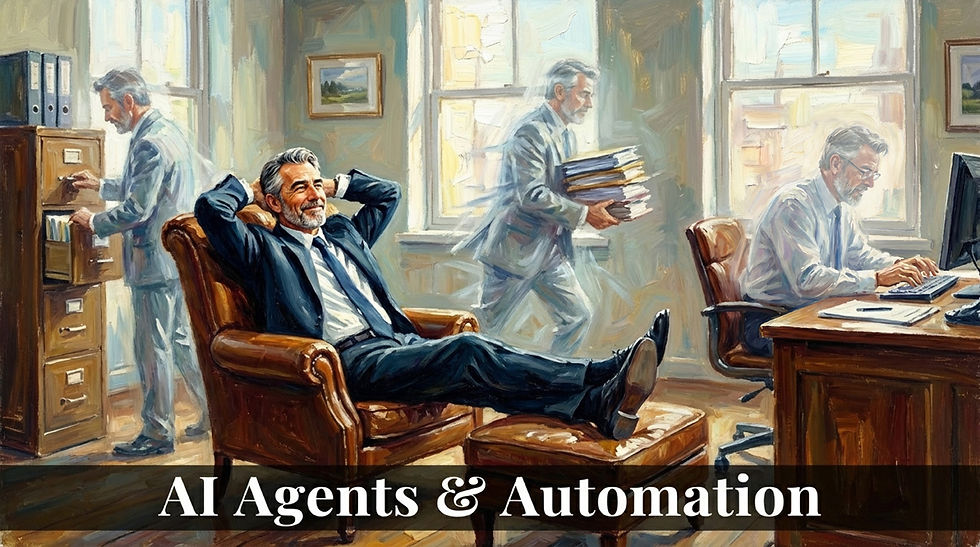
AI agents become active participants in everything at Level 6. (NotebookLM)
AI Product Design: The product is fluid and hyper-personalized. There is no single “final” version of the interface; instead, there are millions of variations tailored to individual users. Design focuses on the “meta-experience”: defining the boundaries of what the AI cannot do and ensuring that even dynamically generated experiences feel coherent and safe. Trust is maintained through radical transparency about what is generated vs. curated, with clear mechanisms for users to reset or customize the agent’s behavior.
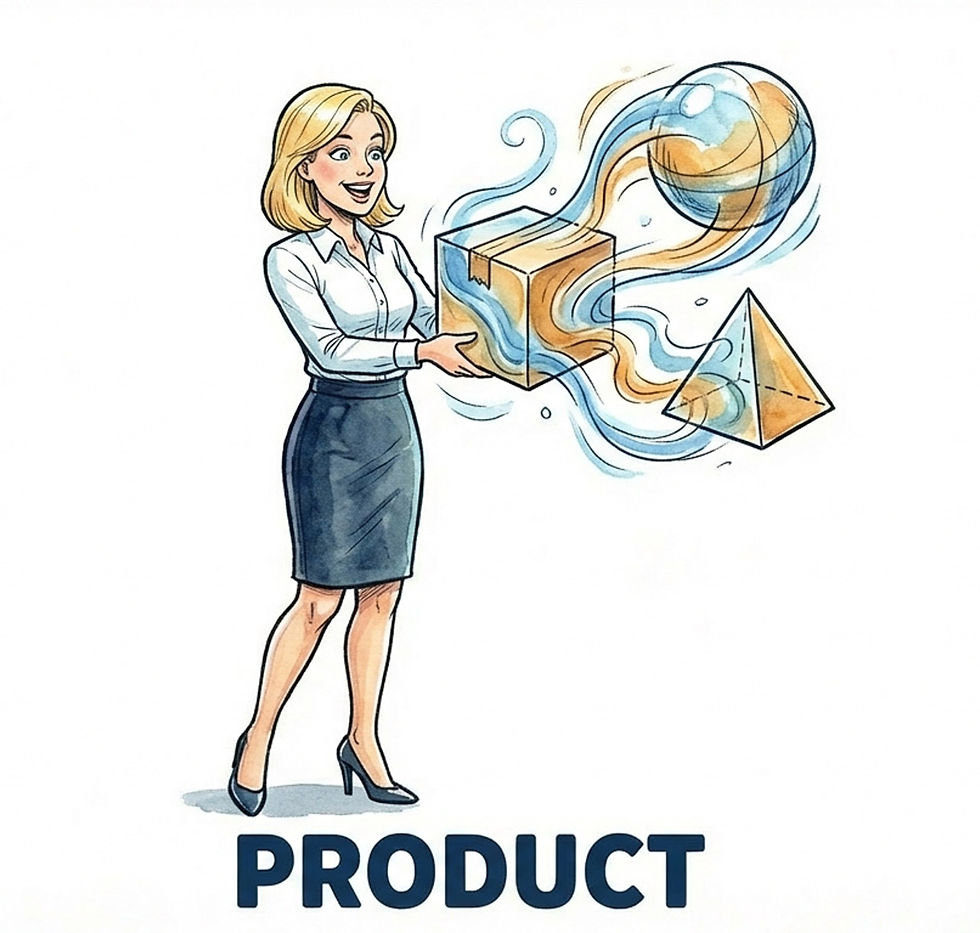
Abandon the notion of one single product with one single user experience. What you deliver will morph as each user experiences it. (NotebookLM)


There you have it: the 6 levels of the AI Design Capability Maturity. Let’s turn to how to apply this model. (NotebookLM)
Other Maturity Models
To fully appreciate the necessity of an AI-specific design maturity model, let’s see why established maturity frameworks in adjacent fields are insufficient for the new world:
Software Engineering (CMMI): The traditional Capability Maturity Model Integration (CMMI) focuses heavily on defect reduction, process predictability, and standardization in deterministic systems. The AI Design Maturity Model, however, grapples with probabilistic outcomes. While CMMI seeks to eliminate variance, high AI design maturity embraces it, implementing graceful fallbacks and continuous learning loops to manage model drift and unpredictability.
Product Design and Development: Classic product maturity models track a company’s evolution from building siloed, feature-factory outputs to delivering holistic, user-centric solutions. AI Design Maturity parallels this but fundamentally changes the material of design. In traditional models, a shipped product is a finished, static artifact. At high AI maturity, the shipped product is a living ecosystem in which user data continuously reshapes the value proposition at runtime.
User Experience (UX): Traditional UX maturity models (like the one I developed many years ago) track an organization’s journey from “user-hostile” to “user-driven,” emphasizing usability, empathy, and research integration. AI design maturity extends these principles to algorithmic transparency. A highly mature UX organization might still struggle with AI if it designs rigid, linear interfaces. A mature AI design practice replaces static flows with adaptive interfaces, focusing heavily on trust calibration, explainability, and ethical guardrails.

Trust calibration is a major concern for AI design, whereas old-school UX was more targeted at persuasive design and selling stuff. (NotebookLM)
Self-Assessment Quiz

(NotebookLM)
Here are 7 quick questions to help you assess your current AI design maturity. Select the response option (A, B, C, or D) that most accurately describes your current state, not your future aspirations. Note the points associated with your choice.
After completing the quiz, sum your total points and check the Results Table at the end to determine your maturity level.
Question 1: How does design leadership view the role of AI, and how is it integrated into the organization's strategy?

[1 Point] A: Leadership views AI strictly as a personal productivity aid for administrative tasks (like summarizing notes) or encourages ad-hoc experimentation without clear intent. There is no formal strategy, and AI is not expected to be part of “real” design work.
[3 Points] B: Leadership views AI as a recognized accelerator for prototyping and communication. They emphasize a problem-led strategy, setting expectations for when to use AI to facilitate trade-offs rather than just for random experimentation.
[5 Points] C: Leadership champions AI as core infrastructure. The strategy focuses on deep alignment with engineering systems, funding tools that allow designers to work with real code or components to directly influence the shipped product.
[7 Points] D: Leadership focuses on governing the “soul” and ethical guardrails of autonomous systems. The strategy has shifted from managing asset production to “gardening” an ecosystem where AI agents generate the UI in real-time.
Question 2: How is AI tooling funded and prioritized within the design team?

[1 Point] A: There is no dedicated budget. Usage is driven by individual initiative using free tools or small, ad-hoc experiments. Investments are often reactive to market pressure ("ship AI") rather than strategic needs.
[3 Points] B: Teams invest in a specific set of tools and documented playbooks. AI-assisted prototyping is explicitly included in design goals, and success is measured by speed, clarity, or the quality of feedback.
[5 Points] C: AI tooling is funded as part of the core design stack. Investment decisions are tied to product velocity and system alignment, enabling workflows that reduce handoff friction and support near-production fidelity.
[7 Points] D: Investment shifts from design tools to runtime infrastructure and real-time observability. Budgets are allocated for continuous model tuning, proprietary data curation, and human-in-the-loop oversight mechanisms.
Question 3: What is the fidelity and utility of your AI-generated prototypes?

[1 Point] A: Prototyping is mostly manual. If AI is used, it generates static mockups or copy that are difficult to edit, maintain, or hand off to engineering, often resulting in throwaway work.
[3 Points] B: We use AI to generate and iterate on prototypes for validation. While useful for decision-making, the outputs are usually limited in fidelity and still require significant manual rebuilding for production.
[5 Points] C: We prototype using real front-end components or code. Designers can make meaningful edits to AI outputs, creating realistic product experiences that bridge the gap to engineering or even ship directly.
[7 Points] D: The distinction between design time and runtime is dissolving. AI agents use live design tokens to autonomously generate and optimize UI variations in real-time based on user context.
Question 4: How comfortable and skilled is your design team with AI tools?

[1 Point] A: There is a culture of skepticism or anxiety. Knowledge is siloed, and usage is limited to low-risk tasks (e.g., rewriting emails). Many designers feel AI is irrelevant to “real” design work.
[3 Points] B: Peer learning is emerging. Designers regularly use AI to prototype flows and support collaboration. Some have developed strong practices and shared prompt patterns, while others are catching up.
[5 Points] C: AI capability is widespread. Designers think natively in systems and code (vibe coding). Hiring and performance expectations explicitly include AI fluency and the ability to guide technical outcomes.
[7 Points] D: Designers are technical system thinkers. The team values “vibe curation” and the ability to craft the abstract rules and “physics” of an experience that AI agents execute.
Question 5: How does the organization support designers in learning to use AI effectively?

[1 Point] A: Learning is self-directed or non-existent. There are no shared standards, and designers often try tools once and abandon them due to frustration or lack of guidance.
[3 Points] B: Documented workflows and internal playbooks exist. Enablement focuses on problem framing and reproducing successful patterns, allowing designers to use tools with reasonable success.
[5 Points] C: Enablement is standardized and technical. Designers are trained in "design-system-aware" prototyping and workflows that tighten collaboration with engineering, making AI use low-friction and repeatable.
[7 Points] D: Learning is continuous and often automated. The system itself suggests improvements to design rules based on user data, and designers learn how to audit and debug autonomous decisions.
Question 6: How are AI features integrated into the actual products you build?

[1 Point] A: AI is often a superficial bolt-on feature (e.g., a generic chatbot) added due to market pressure. Technical constraints and failure modes are often misunderstood or overlooked during design.
[3 Points] B: AI adoption is problem-led. Teams define user jobs and success measures. Designers have enough literacy to influence product boundaries and manage user expectations regarding uncertainty.
[5 Points] C: We design the whole experience, including trust, refusal patterns, and source prioritization. Designers understand LLM patterns well enough to steer technical trade-offs with engineering.
[7 Points] D: The product is fluid and hyper-personalized (Generative UI). There is no single “final” interface; AI agents generate the experience on the fly, with design ensuring coherence and safety.
Question 7: When and how are ethical considerations (bias, safety, trust) addressed?

[1 Point] A: Ethics and guardrails are largely an afterthought, usually addressed only when prompted by legal, security, or communications teams late in the process.
[3 Points] B: Ethical questions regarding consent, trust, and user expectations are raised early. Designers attempt to influence these factors but may lack deep technical leverage to enforce them.
[5 Points] C: Responsible AI is treated as a product quality metric. Designers are technically fluent enough to shape behavior policies and safety boundaries directly.
[7 Points] D: Trust is maintained through radical transparency. Designers focus on monitoring system health and intervening only when the autonomous system drifts from core human values.
Results Table
Sum the points from your 7 answers above to get an estimate of your current maturity level.
7–13: Level 1, Limited.
14–18: Level 2, Reactive.
19–26: Level 3, Developing.
27–34: Level 4, Embedded.
35–43: Level 5, Leading.
44–49: Level 6, Symbiotic.
These scores assume that you were honest in answering the quiz. The main way people deceive themselves in self-assessments of their organizational maturity is by claiming they “do X” if they have done it once. However, for the various “Xes” that combine to define a certain maturity level, you should only count them if you do them consistently, or at least most of the time.

Answer the self-assessment test based on your normal behavior, not from isolated (and unrepresentative) cases of high-maturity examples. (Nano Banana Pro)
The Need for Sequential Progression in AI Maturity
The Capability Maturity Model (CMM) for AI in Design is not just a ladder of achievement but a structural framework where each level serves as the necessary foundation for the next. A critical truth in organizational development is that progression must happen one level at a time. The reason is that maturity is not defined by your best day; it is defined by your normal day. Each level is a bundle of behaviors that have to rise together: leadership expectations, strategy and budgeting, culture and talent, enablement, automation, and the way AI shows up in the shipped product.

(NotebookLM)
Attempting to leapfrog, for example, from a state of chaos (Level 2) directly to a state of operational excellence (Level 4) is impossible because maturity is not defined by a single successful project, but by the consistent, institutionalized capability across multiple dimensions.
If your answers to the self-assessment quiz indicate that you are currently at level 2, then first of all, congratulations on your honesty in answering the questions. Second, you should now aim to move to level 3. Level 4 and up are not available for now.

Trying to skip a level will lead to your downfall. One step at a time! (Seedream 5 Lite)
Maturity models are cumulative. In the AI Design CMM, the six characteristics (Leadership, Strategy, Culture, Enablement, Automation, and Product Design) are deeply interdependent. If an organization tries to skip a level, it creates capability debt that eventually leads to system failure.
Consider a team attempting to reach Level 5 (Leading), where vibe coding and pull-request-based shipping are the norm. To do this successfully, the team must have already mastered both Level 3 (Developing), which involves documented playbooks and specific tool investments, and Level 4 (Embedded), which requires deep alignment between design and engineering systems.
Without the “Design-System-Aware” prototyping found at Level 4, a designer attempting Level 5 vibe coding will produce isolated, non-performant code that engineers will ultimately reject as “garbage” or “throwaway work” (a Level 2 symptom). You cannot curate the “physics” of a system (Level 6) if your team hasn’t yet learned how to trust a prototype or manage refusal patterns (Level 4).
Lessons from Software Engineering (CMMI)
The traditional CMMI framework illustrates this through its focus on process. An organization cannot reach Level 5 (Optimizing) without first reaching Level 3 (Defined). You cannot use data to continuously improve a process if that process hasn’t been standardized and documented yet. If you try to optimize a chaotic, undefined process, you simply accelerate the production of defects. In AI design, this translates to: you cannot optimize an AI agent’s autonomous UI generation (Level 6) if you haven’t first defined the ethical guardrails and problem-led strategies of Level 3.
Lessons from UX Maturity
In Traditional UX Maturity, organizations often try to jump from being “User-Hostile” directly to “User-Driven” by hiring a few senior designers. To be honest, that was the case at Sun Microsystems when they recruited me to be its Distinguished Engineer for usability in 1994, shortly after poaching many great UI designers from Apple. The company’s 30,000 staff were traditional Unix geeks and didn’t change quickly to embrace UX. We failed, despite being a small high-talent UX team.
Without the cultural shift and executive buy-in found in the middle stages, designers attempting to advance UX methodology find themselves blocked by technical debt and a lack of research budget. Similarly, in terms of AI maturity, a company cannot “Design Trust” (Level 4) if its leadership still views AI as a “bolt-on feature” (Level 1). The psychological shift from fearing the machine to mastering it requires the incremental wins and literacy gained at each intervening step.
The Dangers of the Isolated Case
A single designer using an advanced agent to build a feature does not make an organization Level 5. True maturity is a measure of consistency. If the organization lacks the budget for runtime infrastructure (Level 6) or the talent density for system thinking (Level 5), the leapfrog attempt will be a fragile exception that fails to scale, eventually regressing to the organization’s true mean maturity level when under pressure.
Maturity Model as Accelerator
While levels cannot be skipped, understanding the model provides a significant competitive advantage: focused acceleration. Once you understand the levels and accurately place your current one, you stop wasting time copying the trappings of advanced practice and start investing in the few changes that unlock the next stage.

The capability maturity model works as a “turbo” button to boost your acceleration to higher levels. (NotebookLM)
For example, a Level 2 AI design team accelerates by making work reproducible (shared workflows, training, evaluation habits, and earlier attention to failure modes and guardrails) because that is what turns experimentation into capability. On the other hand, a Level 3 team accelerates by embedding AI into the design and engineering system so prototypes and patterns carry forward into production, because that is what turns isolated wins into organizational throughput. Knowing your level turns improvement from a vague ambition into a sequence you can execute: build the next rung until it becomes normal, then plan the rung after that.
By using the maturity model as a diagnostic tool, leaders can identify the specific bottlenecks in their 6 characteristics. This clarity transforms “moving fast but going nowhere” into a targeted, high-velocity climb. You accelerate not by skipping steps, but by ensuring that every effort made is a direct investment in the specific requirements of the next level, creating a stable platform for the leap after that.
With a focused effort on maturity progression, you can advance two levels per year. Thus, moving from level 1 to level 5 is a jump of four levels, or two years’ sustained effort in capability improvement. This is a much faster pace than was possible with legacy UX processes, where it usually took several years to progress through one maturity level. The reason AI maturity advances faster than old-school UX maturity is that anyone with half a brain knows AI is changing the world at lightning speed, and they need to keep up to avoid obsolescence.

(Nano Banana Pro)
Like the lightbulb that must truly want to change for the psychiatrist, an organization must actively desire capability maturity. Historically, advancing UX maturity was a slow slog because non-UX staff resisted unfamiliar processes. With AI, however, the obvious speed of technological shift creates built-in urgency. While design leaders still face evangelization challenges, achieving organizational buy-in is far easier today than during the rise of traditional user-centered design.
Treat Level 5 as the realistic target for most organizations today: it’s the level where AI is no longer a novelty or a bolt‑on, but a stable part of how design and product delivery actually work.
Level 6 remains a stretch goal in 2026 for almost everyone except a small set of elite AI‑native startups, because it requires a fundamentally different operating model: one where runtime adaptation, continuous observability, and governance of autonomous behavior are everyday practice rather than ambitious prototypes. If you’re already operating at Level 5 consistently, then Level 6 may become plausible in 2027, but it only becomes possible after the organization can reliably run a Level 5 AI design stack without heroics.

Most companies should aim for Level 5 in 2026 and Level 6 in 2027. (NotebookLM)

Freezing time and taking it easy to sip your espresso is not an option. AI moves ahead relentlessly with or without you. Your only choice is whether to accelerate your AI maturity level fast enough to avoid going out of business. (NotebookLM)

The ultimate goal is a human–AI partnership in which both parties contribute their respective strengths. One benefit of AI-fueled creation is that it enables older humans to keep creating. (NotebookLM)
For a summary of this article, watch my short overview explainer video (YouTube, 6 min.).


